
Most Sunday mornings I make café con leche (Café Bustelo and whole milk) and write blogs to valuation people. It’s become a ritual. And for some reason, I keep coming back to the stalemate between chief appraisers and fee appraisers.
On the residential side, you see open promotion of non-lender work. On the commercial side, you still hear (in a negative tone), “I do bank work.” I see this tension as a massive opportunity to rebuild community.
Lately, one of the most frequent questions floating around commercial appraisals is:
“Are you using AI?”
And its awkward follow-up:
“Where in the report are you using it?”
I think that’s the wrong question.
A better question is:
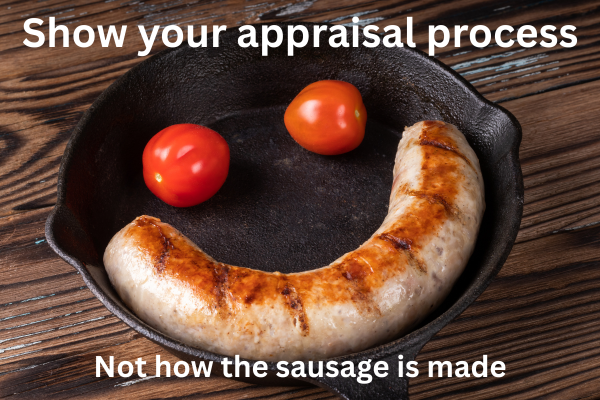
“Show me your process.”
Now, let’s be clear about what that does not mean.
It would be very unreasonable for a chief appraiser to expect a fee appraiser to disclose exactly how the sausage is made. No appraiser is going to say, “My junior person assembled the entire report and the senior person edited it.” Or “The front half of the report and leases input into Rockport Val or Argus was done in the Philippines.
And they shouldn’t.
USPAP wants credibility. You sign the report. You stand behind it. That’s the deal. In fact, over-disclosure would be reckless. If appraisers openly detailed which sections were drafted by junior staff, offshore teams, or AI, opposing counsel would shred the appraiser expert witness.
Bank reviewers would naturally fixate on perceived weak points. What was intended as transparency would quickly become ammunition. So let’s stop pretending the conversation is about disclosure.
What chief appraisers are actually asking, whether they realize it or not, is something far more reasonable:
Can I trust the way you think?
I’ve seen this firsthand. When chief appraisers have honest conversations with their appraisers about process, reports improve. Without that dialogue, revision rates keep climbing.
The biggest gains don’t come from revealing secrets. They come from explaining judgment, being consistent. Explain how the subject fits the market, why the comps matter and why you picked that cap rate. Write it like it was your money at risk.
The opportunity for communication happens every time you write an appraisal report.
That’s how trust is built. Not by exposing your methods but by demonstrating that your thinking is disciplined, repeatable and sound.
So maybe the real question isn’t about disclosure at all.
Maybe it’s this:
Is it time to build a better valuation community?
Let’s Talk
Jeff@realwired.com 813-230-3798